Not just painting, Not just science: In Milan, Leonardo da Vinci left behind something far greater: a bold, modern vision of the world. His extraordinary mind — capable of blending art, engineering, architecture, and the study of nature into one seamless language — found in Milan one of its highest expressions.
When Leonardo arrived in 1482 to serve Ludovico Sforza, known as Ludovico il Moro, he stepped into a city full of ambition and power. He remained until 1499, when the French siege brought Sforza rule to an end. Those years were marked by an astonishing creative flourishing. Leonardo experimented, designed, imagined, and built — leaving traces that are still visible today.
Following Leonardo’s footsteps in Milan means walking straight into the Renaissance and discovering a city that became his open-air laboratory.
Explore Milan through Leonardo’s eyes: join a guided tour and experience the city like a true Renaissance crawler.
Sforza’s Castle: The Sala delle Asse and Ludovico’s Mulberry Tree
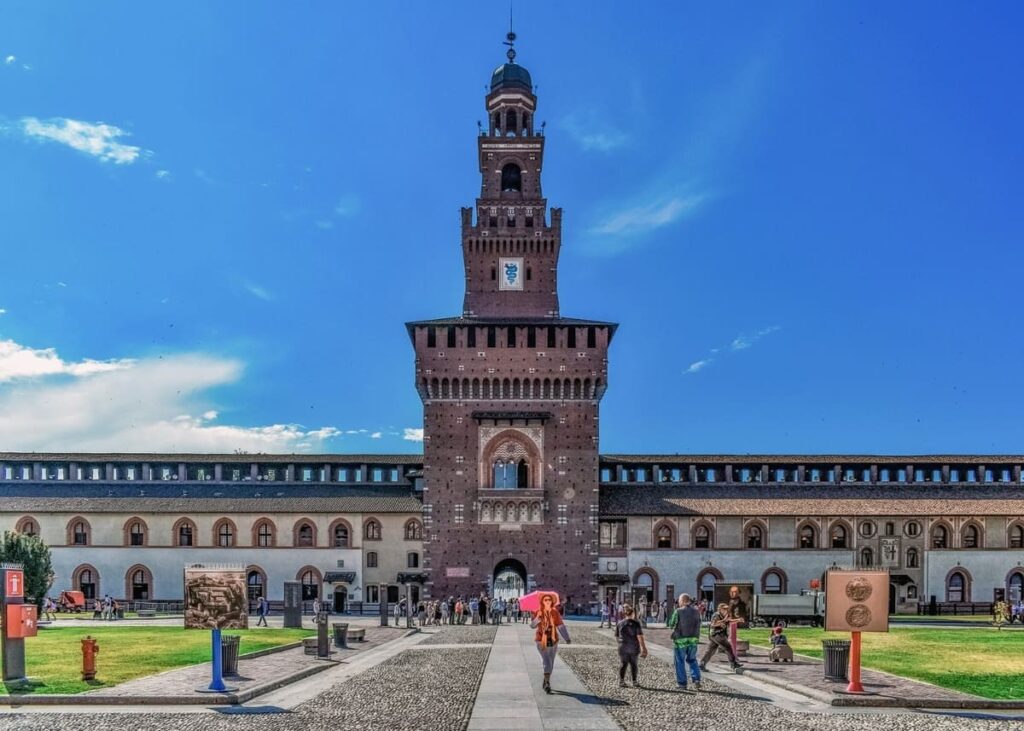
Our journey begins at the Sforza’s Castle, residence of the Sforza family and the beating heart of Milanese political life — a world of courtly intrigue and power struggles.
Here, Leonardo worked for nearly two decades (1482–1499, and briefly again in 1506–1507) as court artist, military engineer and theatrical designer for Ludovico il Moro. Though documentation of his daily life at court is fragmentary, his artistic contribution — and the influence he exerted over his patron — is undeniable.
Leonardo decorated the famous Sala delle Asse and the adjacent rooms known as the “Sale Nere.” Despite centuries of restorations, the Sala still possesses astonishing scenographic force. Look up: an intricate pergola of mulberry branches weaves above you, tied together with an elegant golden rope. At the center of this lush canopy, the Sforza coat of arms celebrates Ludovico’s enlightened rule. The mulberry was no random choice. Its scientific name, morus, is a refined tribute to Ludovico “il Moro.” And its leaves nourished silkworms — a cornerstone of Milan’s thriving silk industry. In one immersive masterpiece, Leonardo fused symbolism, politics, economy and nature.
Discover our guided tour of the Sforza Castle in Milan.
Casa degli Atellani: Leonardo’s Vineyard
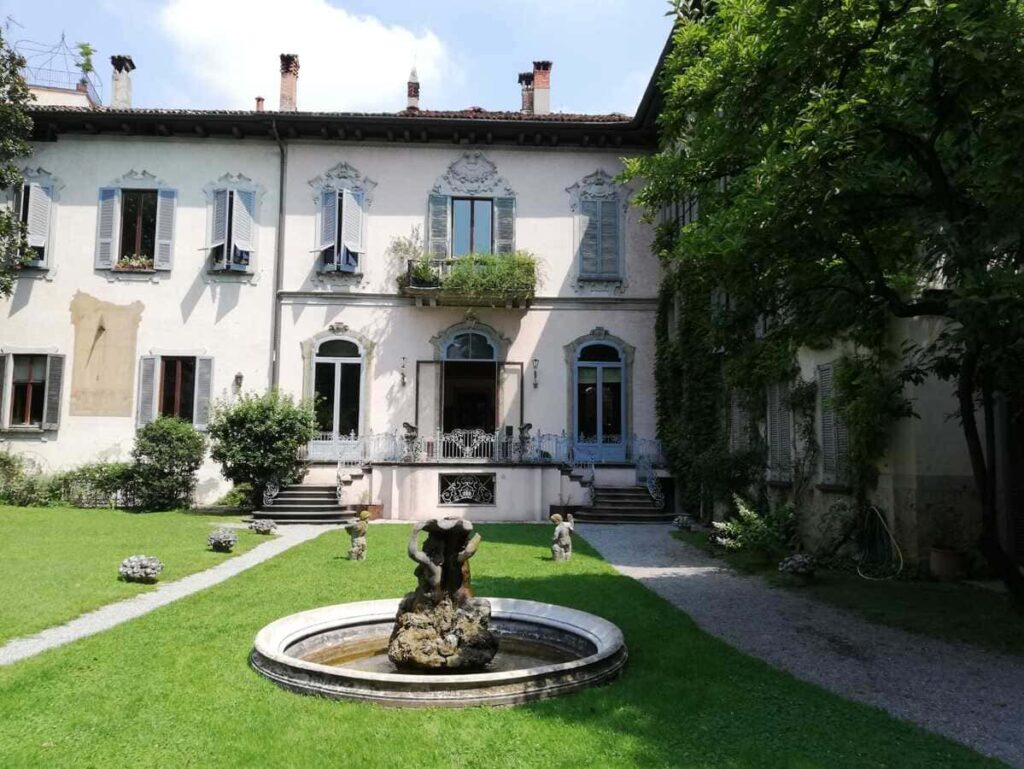
Immaginiamo di assaggiare un vino e sentirci dire: “Questo vino proviene dalla vigna di Leonardo da Vinci”. Non è una leggenda. Ludovico il Moro donò a Leonardo una vigna come ricompensa per il suo lavoro alla Sala delle Asse e al Cenacolo. Grazie a recenti studi genetici, è stato possibile ricostruire la varietà originale coltivata dal Genio: la Malvasia di Candia Aromatica, un vitigno profumato e intenso. La vigna, situata nel giardino della Casa degli Atellani, ha attraversato invasioni, secoli di storia e persino i bombardamenti del 1943, arrivando fino a noi come una delle testimonianze più intime della vita milanese di Leonardo.
Santa Maria delle Grazie: Mystery and Perspective in The Last Supper
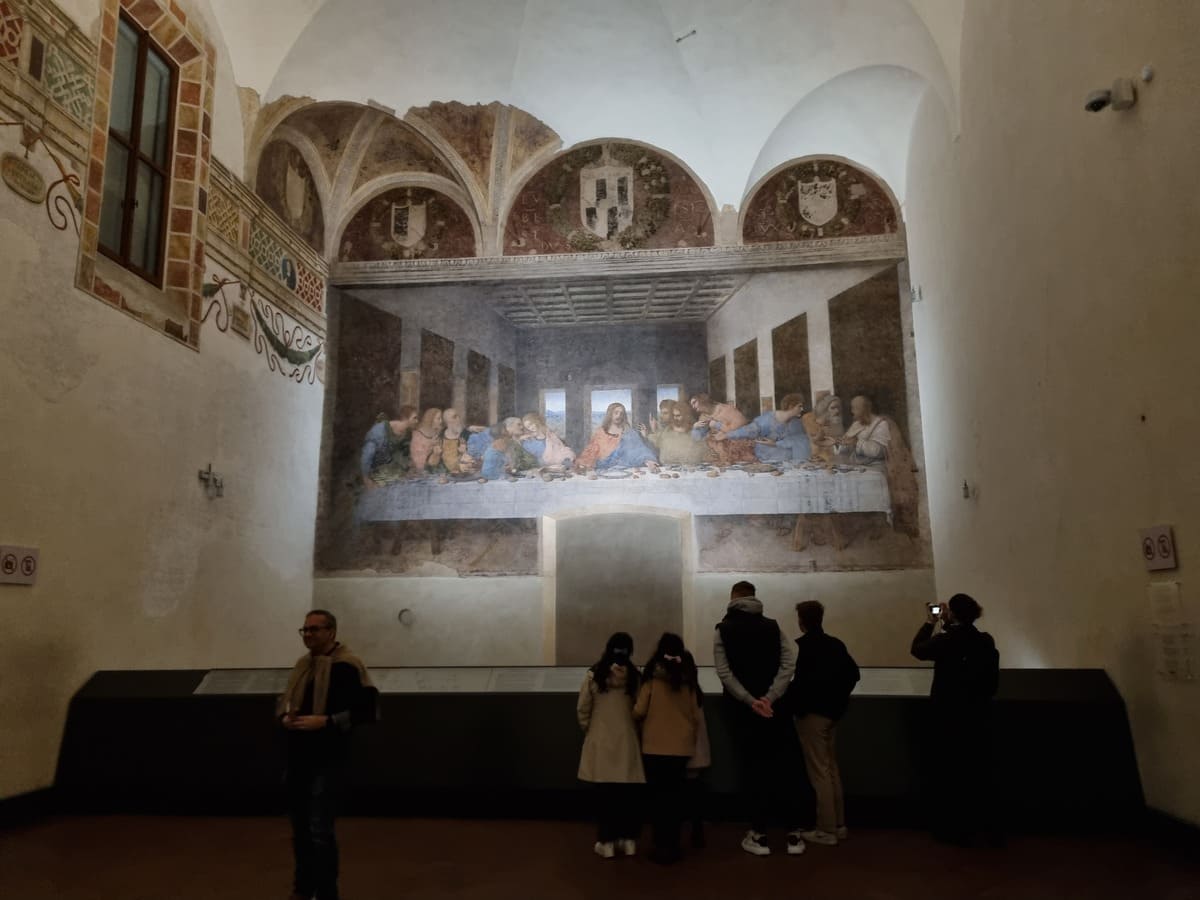
Directly across from Casa degli Atellani lies the most famous site connected to Leonardo in Milan: The Last Supper, housed in the refectory of Santa Maria delle Grazie.
A symbol of the Milanese Renaissance, the masterpiece is shrouded in fascination and mystery, rich with metaphor and layered meaning.
To create it, Leonardo chose an experimental oil technique on dry plaster rather than traditional fresco. The result was revolutionary — and tragically fragile. The painting endured extraordinary damage: Napoleonic soldiers once turned the refectory into a stable; in 1943, bombs devastated the surrounding structure. Yet, after a long and meticulous restoration begun in 1977, visitors can once again experience an image as faithful as possible to Leonardo’s original vision.
His genius lies not only in technical mastery — evident in the flawless use of perspective — but also in symbolism and emotion: the overturned salt spilled by Judas, symbol of broken covenant; the expressive gestures of the apostles link them to astrological signs. The Last Supper continues to inspire scholarship, debate and legend — even feeding contemporary pop culture.
Duomo Cathedral of Milan: Leonardo’s Imprint on Monumental Architecture
When speaking of grandeur and mystery, we can’t overlook the Duomo cathedral of Milan — the city’s ultimate symbol. Between 1487 and 1490, Leonardo contributed designs and consultancy for the tiburio, the octagonal structure supporting the cathedral’s main spire.
Though his proposals were not adopted in their entirety, his studies and models profoundly influenced the architectural debates of the time.
Records preserved by the Veneranda Fabbrica del Duomo confirm his crucial role in addressing complex structural and static challenges. Even here — amid soaring Gothic spires — Leonardo’s analytical mind left its mark.
Discover our guided tour of the Duomo of Milan.
Codex Atlanticus at the Biblioteca Ambrosiana: The Genius Through His Sketches
We have seen how Leonardo merged disciplines, transforming art and science into one extraordinary language. This versatility finds its fullest expression in the Codex Atlanticus — the largest surviving collection of his drawings and writings.
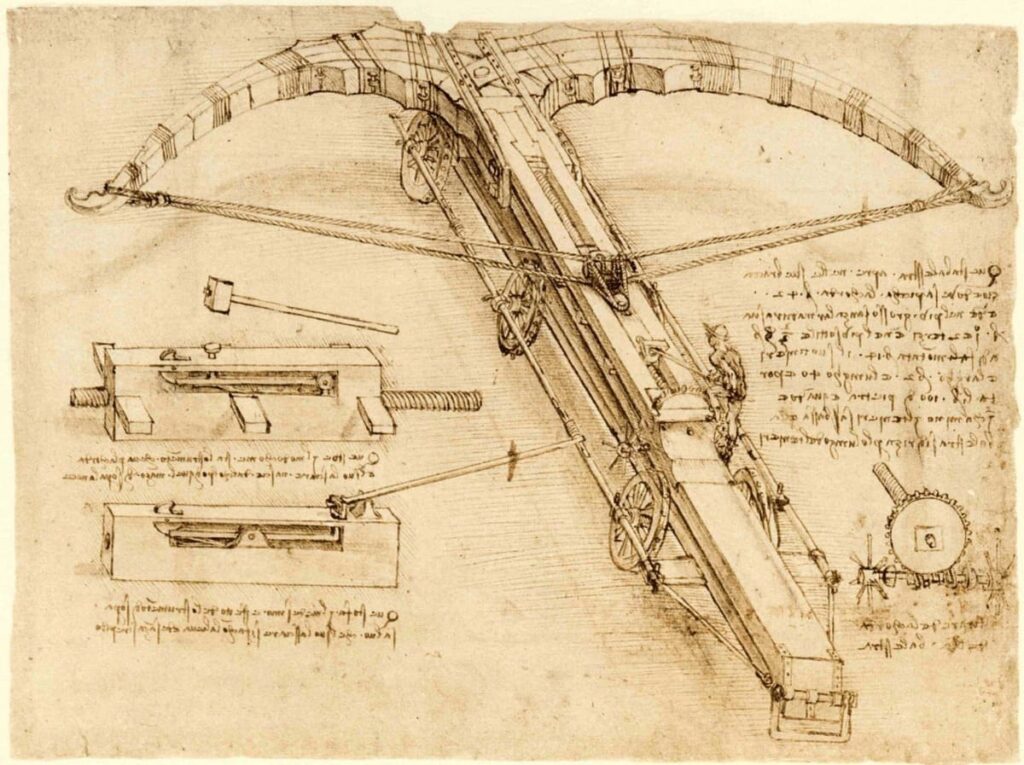
Preserved at the Biblioteca Ambrosiana, just a few steps from the Duomo Cathedral, the Codex contains over 1,700 sheets: from architecture to anatomy, from astronomy to botany, from mathematics to mechanics, from Studies of bird flight and even designs for astonishingly futuristic machines — the famous “Leonardesque machines,” precursors of the airplane.
Flying devices, navigable canal projects, hydraulic engineering, geometric studies and visions of ideal cities show a modern and organized city (Milan) crossed by waterways and organized with rationality and balance. Leafing through the Codex Atlanticus means stepping inside Leonardo’s workshop. It is to follow the unstoppable current of his thoughts and to realize how far beyond his time his vision reached.
The Navigli and the Conca dell’Incoronata: The Engineering of Water
Many of Leonardo’s projects remained visionary sketches ahead of their time. But one area where his genius took concrete form was the Navigli canal system.
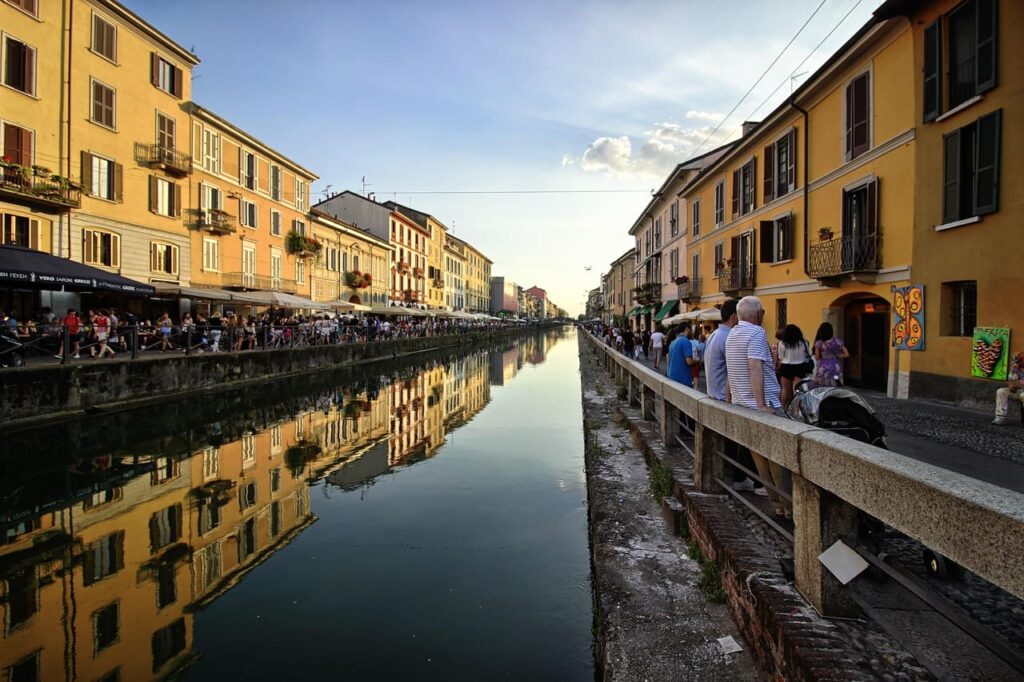
Modernizing and improving the canal network — the strategic infrastructure for commerce and urban life — meant strengthening Milan’s economic heart. Leonardo studied water behavior, currents, elevation changes and lock mechanisms, contributing to the refinement of navigation basins.
Conca dell’Incoronata — also known as the Conca delle Gabelle, once used for collecting tolls — along the Naviglio Martesana stands as a powerful example of this hydraulic innovation.
Here, perhaps more than anywhere else, we witness Leonardo’s most surprising gift: the ability to observe nature deeply, understand its hidden laws and transform them into concrete, functional and astonishingly modern solutions.
Walking today along the Navigli means rediscovering a Renaissance Milan that still flows — quietly and industriously — beneath the surface of the contemporary city.
Monumental Cemetery of Milano: Leonardo’s Cultural Legacy
The Monumental Cemetery is not directly linked to Leonardo’s life. Yet it stands as a powerful testament to his enduring cultural legacy.
Among its spectacular tombs and dramatic sculptures, one senses the influence of the Lombard Renaissance — harmony, proportion, theatrical composition — echoed in funerary architecture.
A striking example is the Campari family tomb, created by Giannino Castiglioni for the founder of the Campari dynasty, clearly inspired by the composition of The Last Supper. It is tangible proof that Leonardo’s iconography continued to shape Milanese art for centuries.
Discover our guided tour of the Monumental Cemetery of Milan.
And Finally… Teatro alla Scala
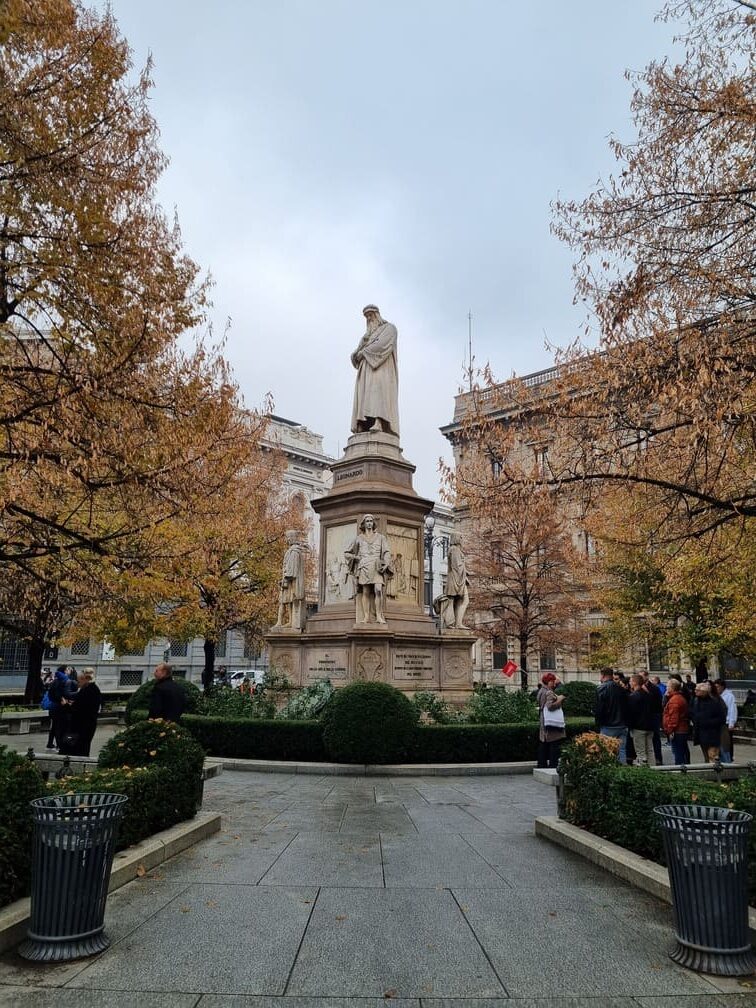
Our journey in Leonardo’s footsteps can only end in Piazza della Scala.
Here, the statue of Leonardo stands high above the square, surrounded by his most trusted pupils, as if still observing the city that helped shape him.
After crossing castles, refectories, vineyards, canals, churches, manuscripts and monumental construction sites, one realization becomes clear: Milan was not simply a stop along Leonardo’s path. It was a city that molded his genius — and was, in turn, transformed by it.
Today, just as in the Renaissance, Milan invites you to observe more closely, to question boldly, and to let yourself be astonished.
Would you like to admire the Sala delle Asse in person and discover the secrets of the Sforza’s Castle? Would you like to stand beneath the spires of the Duomo or walk in the footsteps of the Renaissance?
Book our Milan tours and let yourself be guided into the very heart of the city — where Leonardo’s spirit still lives.