What to See in Bergamo
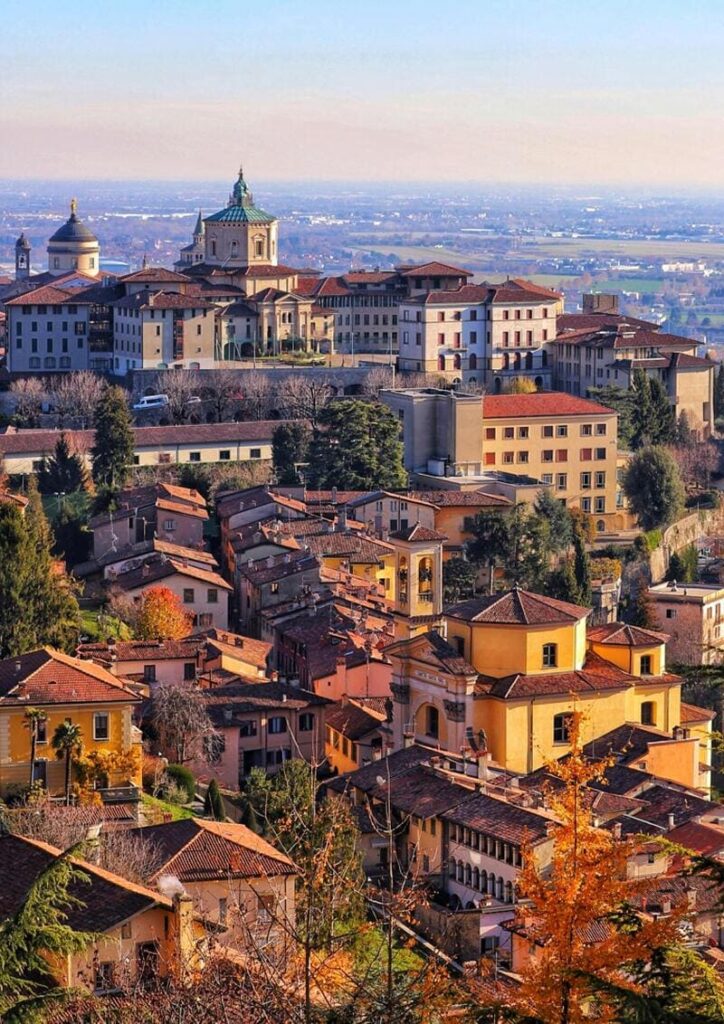
If you’re looking for what to see in Bergamo, get ready to discover a city that surprises you step by step. Located in the heart of Lombardy, Bergamo is a destination that perfectly combines elegance, authenticity, and a well-preserved historical heritage. Even if you only have one day, Bergamo is perfect for a cultural itinerary.
Divided between the evocative Upper Town (Città Alta), enclosed by centuries-old walls, and the lively Lower Town (Città Bassa), which is modern and dynamic, Bergamo is the ideal place for a cultural journey that alternates art, architecture, and local life. In 2023, the city of Bergamo, along with Brescia, was awarded the title of Italian Capital of Culture. Walking here means crossing different eras: from the splendours of the Middle Ages to the 19th-century atmosphere, right up to the contemporary feel of its urban spaces. It’s a perfect experience to be lived slowly, letting yourself be guided by details, views, and stories.
Bergamo Alta and Bassa: The City’s Dual Soul
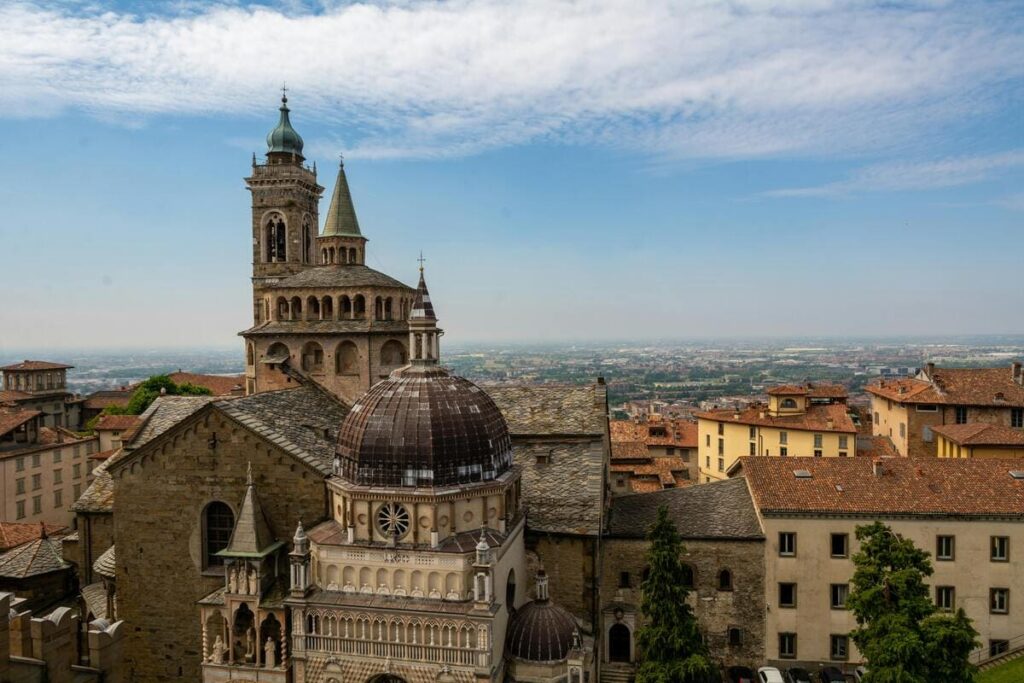
Bergamo stands out for its famous “dual soul”: Città Alta (also called Upper Bergamo) and Città Bassa (known as Lower Bergamo). Città Alta is the historical core, a medieval jewel enclosed and protected by the imposing Venetian Walls, which are now a UNESCO World Heritage Site. This area is the monumental heart of the city and the main destination for anyone visiting Bergamo Alta. Conversely, Città Bassa presents itself as a modern and dynamic hub, the centre of contemporary, commercial, and administrative life.
Città Alta: This is the historical and monumental core of Bergamo, encircled by imposing centuries-old walls. Most of the monuments, historical palaces, and cobblestone streets that narrate the city’s medieval and Renaissance past are concentrated here.
Città Bassa: This represents the modern, lively and commercial part of the city, with its wide avenues, boutiques and business centres. It is the beating heart of Bergamo’s contemporary and administrative life.
The two sections are beautifully connected by the historic funicular, an unmissable attraction that also offers breathtaking panoramic views during the ascent and descent.
Let us guide you to discover the city’s two souls! Explore our private walking tours and choose between Città Alta and Città Bassa !
The Bastions of Porta Nuova and the History of Bergamo
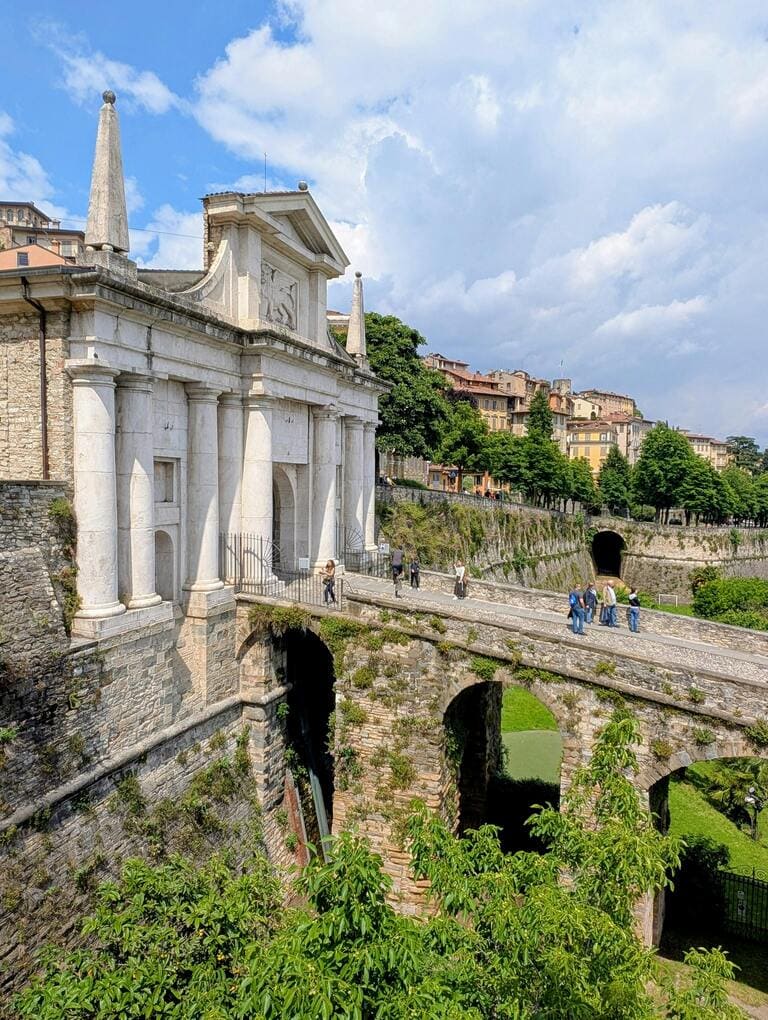
The Porta Nuova Bastions represent a symbolic threshold between eras: between ancient and modern Bergamo. Here, the view opens up, the city breathes, and you can perceive the urban transformation that has reshaped Bergamo over the centuries. It is important to note that Porta Nuova is located in the Lower Town and serves as a monumental entrance, distinct from the Venetian Walls that encircle the Upper Town.
- The City of the Thousand: This area is deeply linked to the figure of Giuseppe Garibaldi, and Bergamo earned the nickname “City of the Thousand” for the great contribution its volunteers gave to Garibaldi’s expedition for the Unification of Italy.
- Historical Memory: Walking through these spaces, you get the sensation of passing through a place steeped in memory, where history and identity intertwine, thanks to the 19th-century architecture of the Lower Town gateway. Its elegance marks the city’s modern expansion.
- Venetian Walls: a complex of fortifications surrounding the Upper Town, they testify to Bergamo’s defensive past. These UNESCO Heritage walls form a panoramic pedestrian path over 6 kilometres long, ideal for a sunset stroll.
Donizetti Theatre and the Modern Soul of Città Bassa
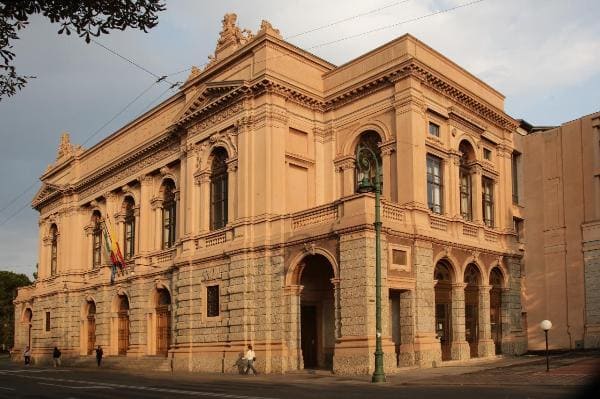
Dominating the scene of the Sentierone (the elegant salotto of the Lower Town), we find the Donizetti Theatre. A symbol of the musical and cultural tradition of Bergamo, this is the hub for cultural events and a meeting point in the Lower Town, and its neoclassical facade contributes to the refined and relaxed atmosphere of the area. The theatre is named after Gaetano Donizetti, a key figure in the city and one of the greatest Italian opera composers. Its presence is a reminder of how deeply connected Bergamo is to music and culture, acting as a vital focal point for opera, symphony, and drama seasons.
After a major restoration project, the theatre has returned to its original splendour, hosting internationally acclaimed events. In addition to the theatre, the Lower Town is home to one of Italy’s most important art galleries, the Carrara Academy, which displays masterpieces by masters such as Raphael, Botticelli and Bellini, representing another major cultural attraction. The Accademia Carrara is a focal point for Renaissance art in Northern Italy, with a collection spanning from the 15th to the 19th century, making it essential for art lovers.
Piazza Vecchia and the Baptistery: The Monumental Heart of Città Alta
After riding the Funicular and strolling the cobblestone streets, you arrive at the vibrant heart of the Upper Town: Piazza Vecchia. Defined by Le Corbusier as “the most beautiful place in the world,” this piazza is the symbol of Bergamo’s Renaissance and civic elegance.
Here you will find:
- Campanone (Civic Tower): The Campanone, the Civic Tower, stands tall in the piazza. Climbing to the top offers a spectacular 360-degree view of the Upper Town, the Venetian Walls, and the rooftops of the Lower Town. Every evening at 10:00 PM, its hundred bells ring out in memory of the ancient curfew that closed the walls.
- Palazzo della Ragione: This historic palace served as the ancient municipal seat and overlooks the square with its imposing Gothic loggias. It is the oldest communal palace in Italy.
- Contarini Fountain: Located in the centre of the square, the fountain adds a Baroque touch and serves as a key landmark for visitors.
Bergamo Cathedral (Duomo)
In the monumental heart of the Upper Town, the Duomo (Cathedral of Sant’Alessandro) is one of Bergamo’s main places of worship and historical landmarks. Its imposing neoclassical facade hides a centuries-old history and a majestic interior, enriched with valuable works of art.
- City Patron Saint: The Duomo is dedicated to the city’s patron saint, Sant’Alessandro, and overlooks the central Piazza Duomo, the episcopal seat of Bergamo, with historical roots dating back to antiquity and the earliest Christian communities.
- The Architecture: The structure blends neoclassical styles on the facade with Baroque influences inside, resulting from numerous renovations over the centuries, creating a visually striking environment. The interior features a Latin cross plan and rich decoration in marble, stucco, and canvases.
- Relics and Works of Art: The Duomo houses important relics and works by local masters, including paintings by Giambattista Moroni, which enrich its artistic and spiritual heritage. Among the most significant works are Tiepolo’s altarpiece and the silver urn containing the relic of Sant’Alessandro.
The Colleoni Chapel and the Basilica of Santa Maria Maggiore
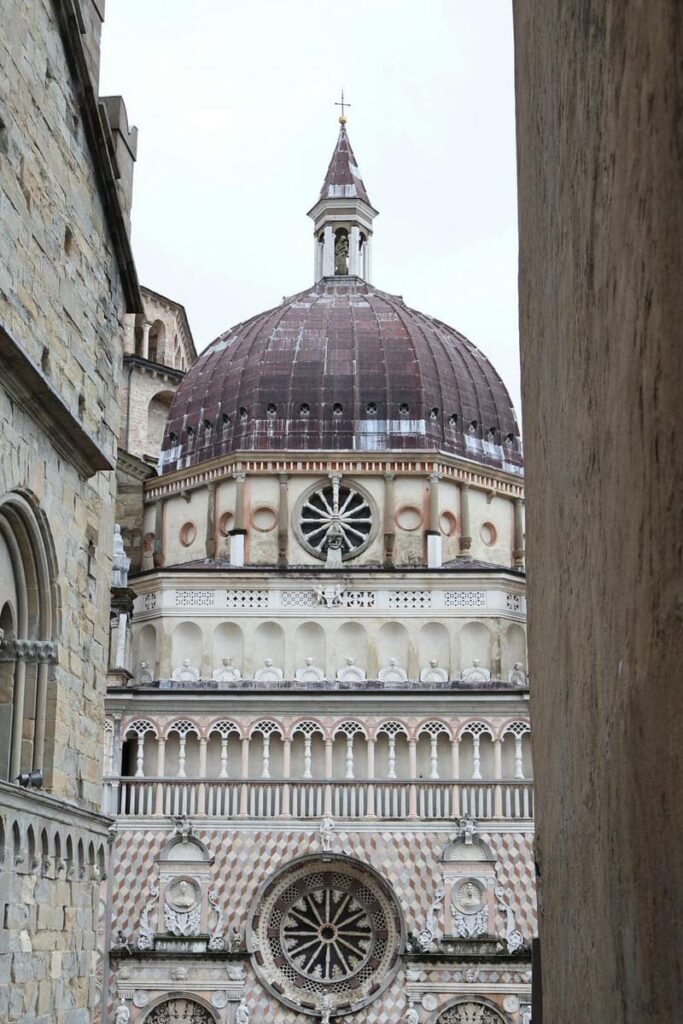
Adjacent to the Duomo, and considered an absolute masterpiece of the Lombard Renaissance, is the Colleoni Chapel. This lavish structure was commissioned by the condottiero (leader of mercenaries) Bartolomeo Colleoni as a mausoleum for himself and his daughter Medea. No less important is the nearby Basilica of Santa Maria Maggiore, a Romanesque jewel that boasts a lavishly decorated interior, famous for Lotto’s inlaid wooden choir. Its central location and wealth of detail make it an unmissable attraction on your Bergamo itinerary.
- The Lavish Exterior: The Chapel immediately captures attention with its richly decorated facade, a riot of red, white, and black polychrome marbles inlaid with figures and medallions, symbolising Renaissance opulence and patronage. Its execution was entrusted to Giovanni Antonio Amadeo, who completed it in 1476.
- The Interior and Frescoes: The interior is equally precious, featuring sculptural works and frescoes by Giambattista Tiepolo, including the Stories of Saint John the Baptist, which represent one of the finest examples of Venetian Baroque in Bergamo. The mausoleum is a true treasure trove of art that celebrates the power of the condottiero Colleoni.
- The Mausoleum: The mausoleums of the condottiero Bartolomeo Colleoni and his daughter Medea are finely crafted and represent an important testament to Renaissance funerary art. It is said that touching Colleoni’s coat of arms brings good luck, a popular tradition much loved by visitors.
Practical Tips for Your Visit to Bergamo: Your Perfect Itinerary
To best organise your Bergamo itinerary, here are some helpful tips:
What to Taste in Bergamo (Typical Cuisine)
- Polenta e Osei: An absolute must. This is a typical dessert you will find in the historic pastry shops of Città Alta. Don’t be fooled by the name! It is a sponge cake dome covered with chocolate and sugar sprinkles, often garnished with marzipan birds.
- Casoncelli alla Bergamasca: For an authentic lunch break, look for one of the many trattorias in Città Alta and order the famous Casonsèi: these are stuffed ravioli dressed with butter, sage, and pancetta. A rich first course that represents authentic local cuisine.
Organising Your Visit:
- Transport: Use Città Alta Funicular not only as a means of connection between the Lower and Upper Towns, but as a true panoramic attraction. Purchase a day ticket to move easily with public transport. For an even more spectacular panorama, take the San Vigilio funicular, which leads to the Rocca and the Castle, offering the most complete view of the plain and the Alps. If you are lucky, on the clearest days, you might even see the skyline of Milan on the horizon.
- Best Time to Visit: Bergamo is fascinating in every season, but spring and autumn offer ideal temperatures for walking along the Venetian Walls.
- Parking: If you arrive by car, consider leaving your vehicle in a parking lot in the Lower Town and taking the funicular or bus up, as traffic in the Upper Town is restricted.
Conclusion
Visiting Bergamo means entering a city that does not merely show itself, but allows itself to be discovered slowly. Every street, every square, every glimpse tells a story made of art, traditions and identity. It is a destination that captivates without excess, with elegance and authenticity. To truly experience Bergamo, immersing yourself in its dual historical and modern soul, the best way is to rely on those who know its most hidden secrets, transforming a simple visit into a memorable experience.
Book your Bergamo Walking tour now and start the adventure!
Featured posts
-
What to do in Italy in November
Outdoor
-
What to Do in Italy in October
Outdoor