
Turin: guided tour of the Royal Palace
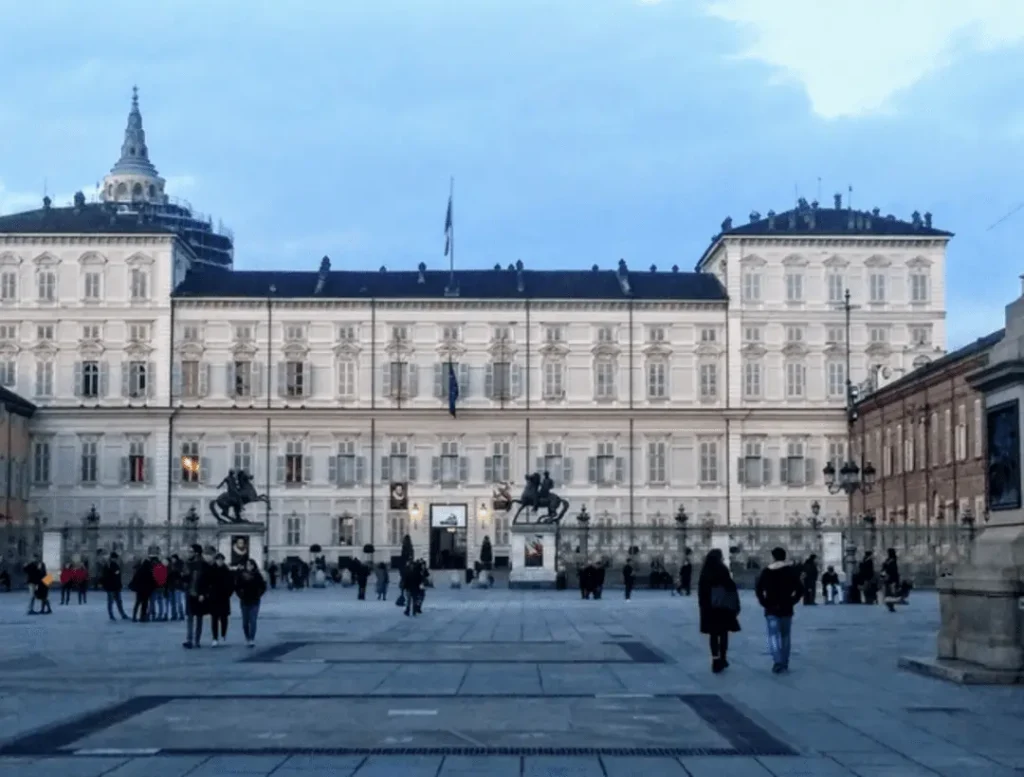
After the end of the monarchy in 1946, the Royal Palace of Turin was almost completely abandoned and many rooms were sealed. However, in 1997 it was declared a UNESCO World Heritage site and finally reopened to the public in 2007.
This magnificent building was originally used as an episcopal residence, as well as the Savoy family’s residence in Turin. After the Unification of Italy, however, the royal family moved to Florence, and so the Royal Palace of Turin became one of their many residences scattered across Italy.
The architects behind this stunning project were Carlo and Amedeo di Castellamonte, two brothers who already had a clear vision of the purpose the structure was meant to serve: a strategic center from which power could be exercised.
Over the centuries, the building underwent various restoration and modification works—some inspired by Egyptian motifs, for example—while the garden was redesigned with new pathways and vegetation.
By joining this guided tour, you will discover true historical gems, such as the strict reign of Victor Amadeus II of Savoy, under whom luxury suddenly disappeared from the Palace and then returned powerfully in 1722 with the marriage of the heir to the throne, Charles Emmanuel. He commissioned architect Filippo Juvarra to decorate the rooms in the most sumptuous way possible.
WHAT TO EXPECT
Hall of Mirrors
Built in 1684, its walls rich with carved and gilded decorations will leave you speechless. It owes its name to the mirror-covered walls, added in the mid-1700s by Benedetto Alfieri and inspired by the famous Hall of Mirrors of the Versailles Palace.
Chapel of the Holy Shroud
Undoubtedly the most famous room in the building, it was built to house the linen cloth bearing the image of Christ after his deposition. The relic, owned by the Savoy family since the mid-1400s, is now kept in a special case at the end of the left aisle of the Cathedral of the Royal Museums.
The construction began in 1607, but only from 1666 onward—under Guarino Guarini—it gained decisive momentum, eventually being completed in 1683.
This chapel was also a victim of a severe fire that required an important restoration (and a consequent closure) lasting nearly 20 years: from 1997 to 2018, when it finally reopened to the public, showcasing the unique Baroque style that sets it apart from other contemporary chapels.
Pages’ Hall
Previously called the Hall of Victories, it is covered with canvases representing victorious historical episodes. Here is where you’ll find the “Security Door”—a double-leaf door made of carved and gilded wood—designed to protect the sovereign.
It is also worth knowing that Camillo Benso, Count of Cavour, was educated in this room.
Charles Albert’s Bedroom
The uniqueness of this room is its ceiling, divided into five sections containing various works by the Viennese painter Daniel Seiter.
The furniture is simple and austere, as the king desired. He chose this room as his bedroom because it was the only one on the first floor with a balcony overlooking the Royal Gardens.
Royal Armoury
Commissioned by Charles Albert, the Royal Armoury now houses one of the world’s largest collections of weapons, including both firearms and edged weapons acquired by the Savoy family from the arsenals of Turin and Genoa, or received as gifts from foreign kings.
What's excluded
- Tips (optional)
- Food and drink
- Extras
Discover also
Montepulciano: Organic Estate Tour with Tasting and Yoga Among the Vines
Wine tasting
4 hours
Cooking Class in historical villa in Montalcino: A Sensory Journey into the Heart of Tuscany
Cooking class
3 hours
Arts & Culture
Family friendly
Accessibility
What's included
- Entry tickets
- Licensed tour guide
- Small group tour
Participation fee
- Group tours
- Adults (13 to 99+ years old): €59.00 per person
- Children (4 to 12 years old): €29.90 per person
- Infants (0 to 3 years old): free
- Private tour
- 1 person: € 205.00
- 2 people: € 125.00 per person
- 3 to 10 people: € 100.00 per person
